


First Time Homebuyer Guide to Western Pennsylvania Everything You Need to Know
Buying a first home in Western Pennsylvania can feel both exciting and confusing. One house might have a city address and older brick charm. Another might sit on a quiet township road with a septic system, well water, and a steep driveway that matters a lot in February.
The good news is that Western Pennsylvania offers a wide range of homes, price points, neighborhoods, and communities. The challenge is knowing how to compare them without getting lost in mortgage terms, inspection reports, taxes, and local quirks.
This guide walks through the full process, from setting a budget to closing day, with local context for Pittsburgh and the counties around it. It is informational only and should not replace advice from a licensed real estate agent, lender, attorney, tax professional, or inspector.

Know what makes Western Pennsylvania different
Western Pennsylvania is not one single housing market. Pittsburgh, Erie, Butler, Greensburg, Washington, Beaver, Indiana, and smaller boroughs can all feel different from one another. Even within Allegheny County, the experience of buying in the City of Pittsburgh can differ from buying in suburbs such as Mt. Lebanon, Monroeville, Ross Township, Plum, or Bethel Park.
A few local factors matter more here than they might in newer-growth areas.
Older housing stock
Many homes were built decades ago. That can be a benefit because older homes often have solid materials, established neighborhoods, and distinctive details. It also means buyers should pay close attention to roofs, foundations, electrical systems, plumbing, insulation, and moisture issues.
Weather and terrain
Western Pennsylvania has hills, freeze-thaw cycles, heavy rain at times, snow, and shaded lots. Drainage, retaining walls, basement dampness, driveway slope, and roof condition all deserve careful review.
Municipal differences
Two similar homes a few miles apart can have different property taxes, school districts, inspection rules, wage taxes, trash services, and utility setups. In Pennsylvania, local government layers matter.
Varied commute patterns
A short distance on a map can still mean a long commute if bridges, tunnels, hills, or limited routes are involved. In Pittsburgh especially, test the drive during the actual time of day you would travel.
Start with a realistic budget
The first budget mistake many first-time buyers make is focusing only on the sale price. A home that looks affordable online may feel much more expensive once taxes, insurance, maintenance, utilities, and commuting costs enter the picture.
Before touring homes, build a monthly housing budget that includes:
Principal and interest on the mortgage
Property taxes
Homeowners insurance
Private mortgage insurance if required
Homeowners association dues if any
Utilities
Routine maintenance
Savings for repairs
Commuting and parking costs
A common rule of thumb is to keep housing costs within a comfortable share of gross monthly income, but the right number depends on debt, savings, income stability, family needs, and lifestyle. Do not let a maximum loan approval become your target price. Lenders approve based on formulas. You live with the payment.
Plan for cash beyond the down payment
The down payment gets most of the attention, but it is only one part of the cash needed to buy.
Typical upfront costs may include:
Cost | What it covers |
Earnest money | A deposit that shows the seller you are serious |
Inspections | Home, pest, sewer, radon, or specialty inspections |
Appraisal | Lender-required opinion of value |
Closing costs | Lender fees, title charges, taxes, escrow setup, and recording fees |
Moving expenses | Truck rental, movers, supplies, utility starts |
Early repairs | Locks, safety fixes, appliances, paint, cleaning, or tools |
Closing costs vary by loan type, property, lender, and local taxes. Ask lenders for a written loan estimate so you can compare real numbers.
Get preapproved before you shop
A preapproval helps show sellers that you are prepared to buy. It also gives you a clearer price range. In competitive areas, a seller may not take an offer seriously without one.
Preapproval usually requires documentation such as pay stubs, W-2s, tax returns, bank statements, debt information, and permission to check credit.
Do not make major financial changes once you begin the mortgage process. Avoid opening new credit cards, financing furniture, changing jobs without talking to your lender, or moving large sums of money without documentation. These actions can delay underwriting or affect approval.
Compare loan options
First-time buyers often assume they need 20 percent down. That is not always true. Many buyers use lower down payment loans, depending on income, credit, property type, and lender requirements.
Common mortgage options include:
Conventional loans
FHA loans
VA loans for eligible service members and veterans
USDA loans for eligible rural and suburban areas
Pennsylvania Housing Finance Agency programs when available and applicable
Each option has tradeoffs. FHA loans may allow more flexible credit standards but include mortgage insurance. Conventional loans can be attractive for stronger credit profiles. VA loans can offer major benefits for eligible buyers. USDA loans may apply outside dense urban areas, but the property and borrower must qualify.
Ask each lender to explain monthly payment, cash to close, mortgage insurance, interest rate, and long-term costs in plain language.
Choose the right area before the right house
A beautiful house in the wrong location rarely feels like a good deal for long. In Western Pennsylvania, location includes more than distance to downtown Pittsburgh or the nearest highway.
Think about daily life first:
Work commute and backup routes
School district needs
Public transit access
Grocery stores and health care
Parking
Sidewalks and walkability
Snow removal
Internet options
Local taxes
Noise from trains, highways, or industry
Flood risk and drainage
Learn the county and municipality
Western Pennsylvania buyers often look across county lines. Allegheny, Butler, Beaver, Washington, Westmoreland, Fayette, Lawrence, Armstrong, Indiana, and other counties each have their own patterns in taxes, housing stock, and services.
Municipality matters too. A borough, township, or city may have specific occupancy requirements, dye tests, sewer lateral rules, or point-of-sale inspections. These local rules can affect timing and cost.
Before making an offer, ask:
Does the municipality require an occupancy permit?
Are there sewer or dye test requirements?
Who pays for required repairs?
Are there local transfer taxes?
Are trash, water, and sewage public or private?
Are there any pending assessments or major infrastructure projects nearby?
A local real estate agent should help identify these items early.
Understand property taxes in Pennsylvania
Property taxes can change your monthly payment more than expected. In Pennsylvania, property taxes often include county, municipal, and school district taxes. School taxes are usually a major part of the total bill.
When reviewing a listing, do not rely only on the current owner’s tax bill. Reassessment rules and appeal practices can vary. A sale may lead to a tax appeal or change in assessed value depending on local procedures. Ask your agent, lender, or tax professional how taxes may affect the payment after purchase.
This matters when comparing homes across school districts. A lower sale price may not always mean a lower monthly cost if taxes are higher.
Tour homes with local conditions in mind
Open houses can be distracting. Fresh paint, staging, and nice furniture can hide practical concerns. Bring a simple evaluation mindset to each showing.
Look closely at:
Foundation cracks and uneven floors
Signs of water in the basement
Grading that slopes toward the house
Roof age and visible wear
Old electrical panels or knob-and-tube wiring
Galvanized plumbing or outdated supply lines
Window condition
Furnace, air conditioning, and water heater age
Chimney condition
Retaining walls
Driveway slope and winter access
Basements deserve extra attention in this region. Many homes have stone, block, or poured foundations, and water management can be a long-term maintenance issue. A damp basement does not always mean disaster, but it does call for good questions.
Think beyond the listing photos
Photos can make rooms look larger and brighter than they are. During a showing, test the house as if you live there.
Open closets. Stand in the kitchen and imagine cooking. Check cell service. Listen for road noise. Look at neighboring properties. Notice whether the street has sidewalks. Visit the area at different times if possible.
A house is more than the structure. It is also the hill you drive up, the parking spot you use, the plow route after snow, and the basement you check after a storm.

Make an offer that protects you
An offer is more than a price. It sets the terms for the purchase. Common parts of an offer include the sale price, deposit amount, financing type, inspection choices, closing timeline, seller assist if requested, and included items.
First-time buyers sometimes feel pressure to waive protections, especially when inventory is tight. Be careful. Waiving an inspection or appraisal contingency can increase risk. There are ways to write a strong offer without taking on problems you cannot afford.
A balanced offer may include:
A realistic price based on comparable sales
A strong preapproval letter
A reasonable closing date
Clear inspection timeframes
Sensible requests for seller assistance if needed
Flexibility on minor items that do not affect safety or value
Your agent should explain the local market and recent comparable sales. If a strategy makes you uncomfortable, slow down and ask what the worst-case outcome could be.
Take inspections seriously
A home inspection gives you a better understanding of the property. It is not a guarantee that every issue will be found, but it can reveal major concerns and maintenance needs.
In Western Pennsylvania, buyers often consider several inspections depending on the home:
Inspection | Why it may matter |
General home inspection | Reviews structure, roof, systems, safety, and visible defects |
Pest inspection | Checks for wood-destroying insects or related damage |
Sewer camera inspection | Helps identify broken, clogged, or aging sewer lines |
Radon test | Screens for radon, which can occur in Pennsylvania homes |
Chimney inspection | Useful for older homes with fireplaces or flues |
Septic and well inspections | Important for rural or semi-rural properties |
Structural review | Helpful when cracks, settlement, or retaining walls raise concern |
Do not panic over every item. All houses have defects. Focus on safety, structure, water intrusion, major systems, and expensive repairs. Cosmetic issues can wait.
After inspections, buyers commonly choose one of several paths. They may accept the property as-is, ask for repairs, request a seller credit, renegotiate the price, or terminate if the contract allows.
Prepare for appraisal and underwriting
After the seller accepts your offer, the lender continues reviewing the loan. Two steps often create stress for first-time buyers: appraisal and underwriting.
The appraisal helps the lender confirm that the home supports the loan amount. If the appraisal comes in below the purchase price, the buyer and seller may need to renegotiate, the buyer may need to bring more cash, or the contract may have an appraisal-related option depending on the terms.
Underwriting reviews your finances and the property. Respond quickly to document requests. Keep explanations simple and provide complete paperwork. Do not assume silence means a problem. Much of underwriting is routine verification.
Know what happens before closing
The period between offer acceptance and closing can feel busy. A typical timeline includes inspections, repair negotiations, loan processing, appraisal, title work, insurance setup, municipal requirements, final loan approval, final walkthrough, and closing.
Before closing day, complete these tasks:
Review your closing disclosure carefully
Confirm the cash needed to close
Arrange a certified check or wire transfer as instructed
Set up homeowners insurance
Schedule utilities to transfer
Review any repair receipts or municipal documents
Do a final walkthrough
Bring valid photo identification to closing
Be alert for wire fraud. If you receive wiring instructions, verify them directly through a trusted phone number before sending money. Do not rely only on email instructions.

Plan for the first year of ownership
Closing is not the finish line. It is the start of owning and maintaining the home.
The first year often brings small surprises. A leaking hose bib, a drafty window, a noisy furnace, or a slow drain can appear after you move in. Set aside money for repairs and do not spend every remaining dollar on furniture.
Good first-year priorities include:
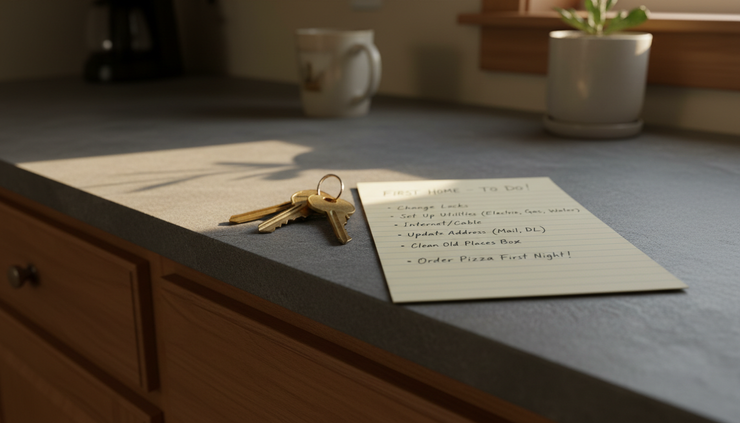
Change locks and garage codes
Replace smoke and carbon monoxide detector batteries
Locate water, gas, and electrical shutoffs
Clean gutters
Service the furnace and air conditioning
Check grading and downspout extensions
Make a seasonal maintenance calendar
Keep copies of warranties, manuals, receipts, and inspection reports
Western Pennsylvania homes reward preventive maintenance. Water control, roof care, heating system service, and winter preparation can prevent larger bills later.
Build a local support list
New homeowners need reliable help. Start building a list before an emergency happens.
Useful contacts may include:
Plumber
Electrician
HVAC technician
Roofer
Mason or chimney specialist
Sewer line contractor
Tree service
Insurance agent
Tax professional
Local municipality office
Utility providers
Ask neighbors for practical recommendations once you move in. They often know which contractors understand the area, which streets ice over first, and how local services actually work.
A simple first-time buyer roadmap
If the process feels like too much, break it into stages.
Review income, savings, debt, and credit.
Set a monthly payment range that feels safe.
Talk with more than one lender.
Get preapproved.
Choose target areas based on daily life and taxes.
Tour homes with a checklist.
Make a clear offer with guidance.
Complete inspections.
Work through appraisal, title, and underwriting.
10. Review closing documents and complete the final walkthrough.
11. Move in and start a maintenance plan.
That is the heart of a strong First-Time Homebuyer's Guide to Western Pennsylvania: buy with local knowledge, not just enthusiasm.

The takeaway for first-time buyers in Western Pennsylvania
A good first home is not just the one with the nicest kitchen or the lowest list price. It is the home that fits the budget, passes careful review, works for daily life, and leaves room for repairs after closing.
Western Pennsylvania offers a lot to first-time buyers, from city rowhouses and classic brick homes to suburban ranches and rural properties with space. The smartest buyers slow down, ask local questions, and look past the listing photos.
Start with the payment you can truly afford. Learn the municipality, taxes, and commute. Take inspections seriously. Keep cash on hand after closing. With that approach, the first home can become a solid step forward rather than a stressful surprise.


Comments