


Buying Near Pittsburgh Rivers and Flood Zones What to Check First
A house near the water can look perfect on a sunny day. In Pittsburgh, that same house may come with a second story hidden in maps, insurance rules, basement history, storm drains, and old grading decisions.
The city’s river geography is part of its appeal. The Allegheny, Monongahela, and Ohio rivers shape the views, trails, bridges, and neighborhoods people love. They also create a real due diligence issue for buyers. Flood risk can affect what a lender requires, what insurance costs, how a basement performs, and how easy the property may be to resell later.
This guide is informational only and is not legal, insurance, or financial advice. Before making a decision, confirm details with the municipality, your lender, an insurance professional, and qualified inspectors.

Start with the flood map, but do not stop there
The first check is usually the FEMA flood map. FEMA maps identify Special Flood Hazard Areas, often tied to the 1% annual chance floodplain. Many buyers hear that described as a “100-year flood zone,” but that phrase can mislead. It does not mean flooding happens only once every 100 years. It means the location has a 1% chance of that level of flooding in any given year, based on mapped conditions.
Look up the property by address in FEMA’s Flood Map Service Center. Then check local or county mapping tools when available. For properties in Allegheny County, local GIS resources may show parcels, contours, streams, and other context that helps you understand the lot better than a national map alone.
Pay attention to these labels:
Map term | What it generally means | Why buyers should care |
Zone AE or A | A high-risk flood zone shown on FEMA maps | A lender may require flood insurance if the loan is federally regulated or federally backed |
Zone X shaded | Moderate flood risk area | Insurance may not be required by the lender, but flooding is still possible |
Zone X unshaded | Lower mapped flood risk | Lower mapped risk does not rule out stormwater, sewer backup, or basement seepage |
Floodway | Area where floodwater must be able to move through | Building limits may be tighter, and future improvements may be harder |
Base Flood Elevation | Estimated water surface elevation during the base flood | Helps compare flood elevation to the home’s lowest floor or basement |
A map review should answer a few basic questions:
Is any part of the structure in a Special Flood Hazard Area?
Is the garage, driveway, yard, or detached structure in a mapped flood zone?
Is the property near a creek, run, drainage channel, or hillside even if it is not directly on a river?
Has the map changed recently, or is a map update pending?
Does the listing rely on old information?
In Pittsburgh, river proximity is only one part of the picture. Some properties far from the main rivers still face water problems because of steep slopes, old storm infrastructure, small streams, filled land, or low-lying streets.
Understand what flood insurance could mean before the offer feels final
Flood insurance catches many buyers off guard because it may appear late in the process. A buyer gets under contract, the lender reviews the flood determination, and then a new required expense appears. By that point, inspection deadlines may be close.
If the home sits in a mapped high-risk flood zone and the buyer uses a mortgage from a regulated or federally backed lender, the lender will usually require flood insurance. Cash buyers are not bound by a lender’s requirement, but skipping coverage can still leave serious risk.
Flood insurance is different from a standard homeowners policy. A typical homeowners policy usually does not cover flooding from rising surface water. Flood insurance may come through the National Flood Insurance Program, known as the NFIP, or through a private flood insurer. Availability, coverage, and pricing can vary by property.
Ask for quotes early, ideally during the inspection period. Do not rely on a neighbor’s premium, a seller’s old premium, or a casual estimate. Flood pricing can depend on the structure, foundation type, elevation, replacement cost, distance to water, prior claims, coverage choices, and other rating factors.
Key questions to ask an insurance professional include:
Is flood insurance required by the lender for this specific property?
What would the premium be for the coverage the lender requires?
What would broader coverage cost?
Does the quote include building coverage only, or building and contents?
Are basements and finished lower levels treated differently?
Is there a waiting period before coverage starts?
Could a private flood policy satisfy the lender?
A low purchase price can lose its appeal if the total monthly cost changes after taxes, homeowners insurance, flood insurance, and maintenance risk are included.
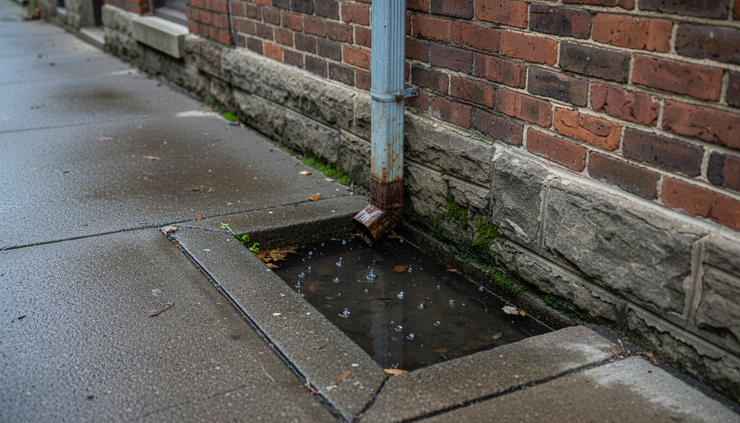
Ask for the property’s water history in plain language
Flood maps show modeled risk. They do not tell the full story of what happened at the house. A seller disclosure may mention water intrusion, flood damage, repairs, mold concerns, roof leaks, sewer backups, or insurance claims. Read it closely, then ask direct follow-up questions.
Useful questions include:
Has the basement ever taken on water?
If yes, where did the water enter?
Was it from river flooding, street runoff, foundation seepage, sewer backup, or a failed sump pump?
How often has it happened?
What repairs were made?
Were permits required for any work?
Were damaged materials removed or simply covered?
Has an insurance claim ever been filed?
Are there photos, invoices, warranties, or reports?
The answer “the basement is dry now” is not enough. Fresh paint, new carpet, paneling, storage shelves, or a recently finished lower level may look nice, but they can also hide a past moisture problem. That does not mean the buyer should walk away. It means the buyer should inspect harder.
Look for signs that deserve more review:
Efflorescence, which looks like white mineral staining on masonry
Rust on furnace legs, water heaters, shelving, or electrical panels
Staining at a consistent height on walls or posts
Musty odor
New drywall only on lower wall sections
A sump pump with no backup power
Floor drains with past staining
Downspouts discharging too close to the foundation
Yard grading that slopes toward the house
For river-adjacent homes, ask whether flood vents, backflow prevention devices, sump systems, retaining walls, and exterior drains have been maintained. These features are only useful if they work when needed.
Check the elevation, not just the address
Two properties on the same street can have very different flood exposure. One home may sit higher on the lot. Another may have a basement below grade, a garage at street level, or a rear yard that collects runoff.
That is why elevation matters. If a property is in or near a mapped flood zone, ask whether an elevation certificate exists. An elevation certificate documents key building elevations and can help an insurer, lender, or local official understand the structure’s relationship to the base flood elevation.
Not every home has one. If a certificate is missing, a buyer may need to ask whether it makes sense to obtain one. A licensed surveyor typically prepares it. The cost and timing vary, so this should not wait until the last minute.
Pay special attention to the lowest floor. In many Pittsburgh homes, the basement is not just storage. It may include laundry, utilities, a bathroom, a finished game room, or even living space. Flood insurance rules and coverage limitations can treat below-grade areas in ways buyers do not expect. A beautiful finished basement near a floodplain deserves detailed review.
Also compare the home to the street:
Does the street slope toward the property?
Is the driveway pitched toward a garage?
Are there catch basins nearby?
Is the home at the bottom of a hill?
Are neighboring lots higher?
Is there a retaining wall that changes drainage patterns?
In older neighborhoods, water often follows paths that predate modern development. A creek may be buried. A ravine may have been filled. A low point may collect stormwater even if the FEMA map looks calm.
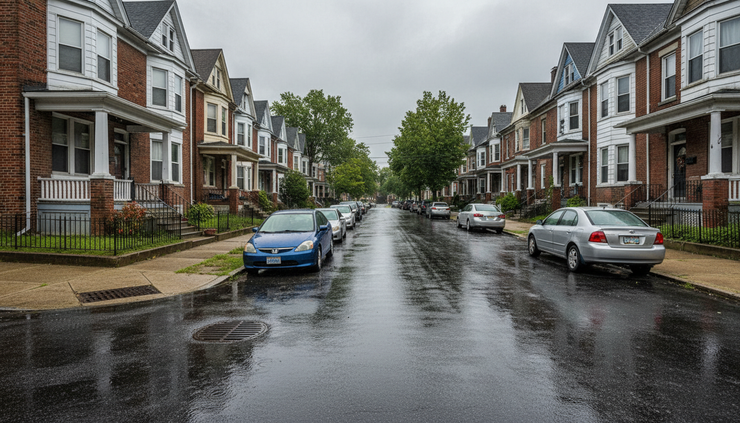
Look beyond river flooding
When people think about Pittsburgh flood zones, they often picture the three rivers rising after heavy rain. That is only one possible source of water damage.
A full water-risk review should include several types of exposure.
Surface water
Heavy rain can run across pavement, yards, alleys, and driveways. If grading sends water toward the house, the foundation becomes the collection point. This can happen far outside a mapped river floodplain.
Sewer backup
Older urban areas may have combined storm and sanitary sewer systems. During intense rain, excess water can overwhelm parts of the system. A sewer backup endorsement on a homeowners policy is not the same as flood insurance, and flood insurance is not the same as sewer backup coverage. Both deserve separate questions.
Creek and small-stream flooding
Pittsburgh-area communities include many smaller waterways and runs. These can rise quickly during storms. Homes near Chartiers Creek, Saw Mill Run, and similar waterways need the same careful review as homes near the main rivers.
Hillside runoff
Steep topography is part of the region. Water can move fast down a slope, especially where vegetation was removed, retaining walls failed, or downspouts discharge poorly.
Ice, debris, and blocked drainage
Storm drains, culverts, and channels need clear paths. Leaves, debris, sediment, and ice can redirect water in ways a buyer may not see during a dry showing.
Bring in the right inspectors and specialists
A general home inspection is important, but it may not be enough for a flood-prone or water-sensitive property. Build a team based on the specific risk.
Possible specialists include:
A home inspector with strong experience in older Pittsburgh housing stock
An insurance agent who writes flood policies
A surveyor for elevation questions
A plumber for sewer camera inspection and backflow questions
A foundation or waterproofing specialist
A municipal zoning or floodplain official
A real estate attorney for contract language when the risk is significant
The sewer camera inspection can be especially useful in older neighborhoods. It can show breaks, root intrusion, bellies in the line, or other problems that may make water issues worse. Ask whether the property has a backwater valve and whether it has been maintained.
For the home inspection, schedule it after or during wet weather if possible. That will not prove the house is safe from water, but it may reveal more than a dry spell. If the inspection happens during a dry week, look harder for stains, repair patterns, and drainage clues.
Put the findings into the contract decision
Flood due diligence should lead to a clear choice. The goal is not to find a risk-free house. The goal is to understand the risk before the deadlines pass.
A buyer may decide to move forward if:
Insurance is available at a cost that fits the budget
The lender requirements are clear
Water history is limited and well documented
Repairs were done properly
The property elevation reduces concern
The buyer can afford future maintenance and mitigation
A buyer may need to renegotiate or pause if:
The flood insurance quote is much higher than expected
The seller cannot explain past water damage
Finished basement space appears vulnerable
The home sits in a floodway
Drainage sends water toward the foundation
The lender requirement changes the monthly payment
The property has repeated sewer backup or flood claims
If risk remains high, contract language matters. Inspection contingencies, insurance contingencies, document review periods, and repair negotiations can shape the buyer’s options. Ask the right professional before waiving protections.

Keep resale in mind
Flood status can affect more than today’s purchase. A future buyer may face the same lender requirement, insurance quote process, and map concerns. If the property has a history of flooding, future disclosures may need to address it. If the neighborhood’s flood map changes, the market may react.
That does not make every near-river purchase a bad idea. Many Pittsburgh buyers happily choose homes near the water, trails, and business districts. The stronger approach is to price the risk accurately, plan for maintenance, and avoid surprises.
Before committing to a home near a river, creek, low point, or drainage path, make this short checklist part of the buying process:
Review FEMA and local flood mapping.
Confirm lender flood insurance requirements.
Get flood insurance quotes early.
Ask for water history and repair records.
Inspect grading, foundation, sump systems, and drains.
Consider an elevation certificate when relevant.
Check sewer condition and backup protection.
Talk with municipal officials about floodplain rules.
Keep enough budget for mitigation and maintenance.
Buying near Pittsburgh’s rivers can be a great choice when the facts support it. The mistake is treating water risk as a small detail. Check the maps, confirm the insurance, inspect the structure, and understand how the lot handles rain. A few extra calls before closing can prevent a very expensive surprise after the next storm.


Comments